1. Propose
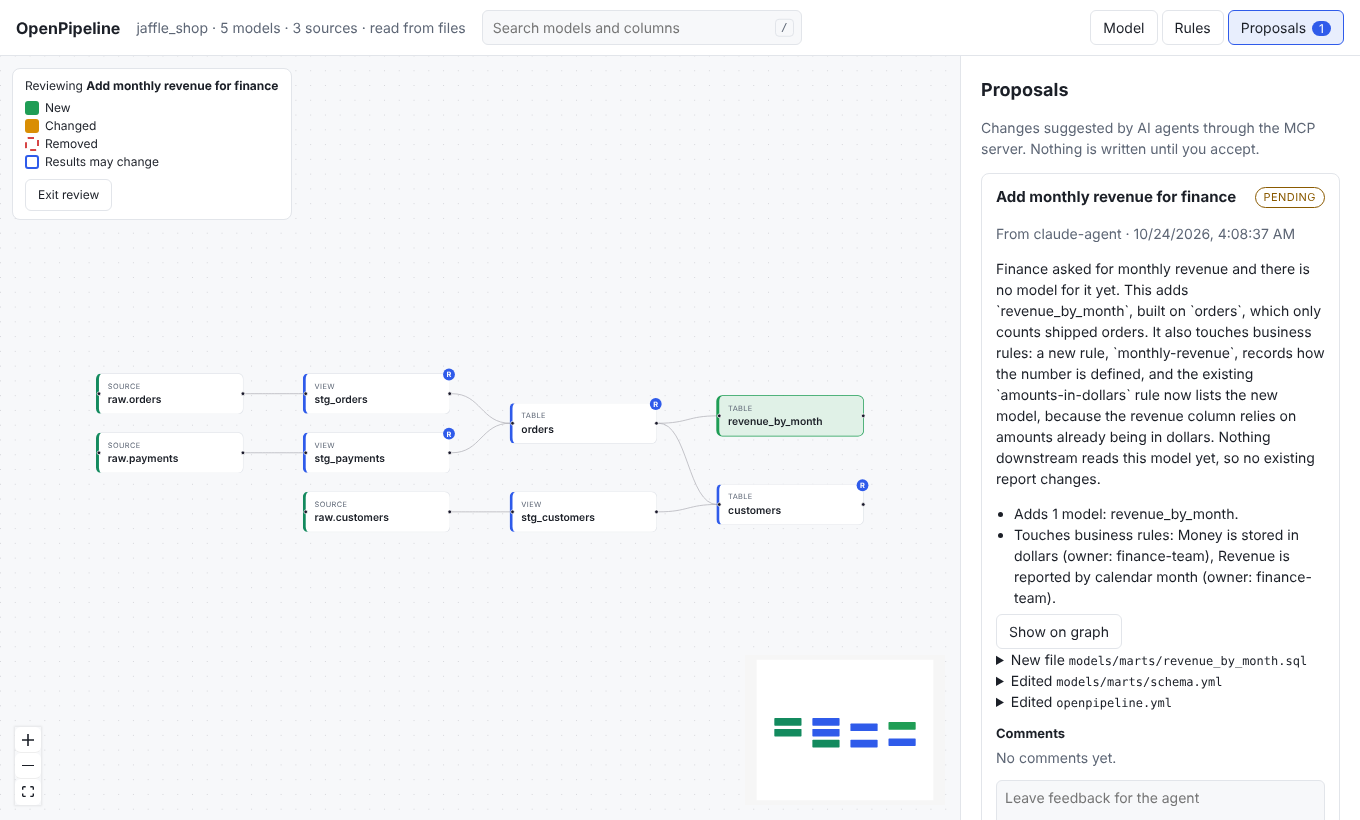
A teammate opens a pull request, or an AI agent files a proposal through the MCP server after checking its idea on sample rows.
OpenPipeline turns every dbt model into a story anyone can read. Every change, from a teammate or an AI agent, goes to the data's owner before it lands.
Try the live demo Read the docs GitHub
A teammate opens a pull request, or an AI agent files a proposal through the MCP server after checking its idea on sample rows.
The change is explained in plain English or your own business words, with every model, column, rule and owner it touches downstream.
The owner accepts or rejects it on the graph. Nothing is written to your dbt files until a person says yes.
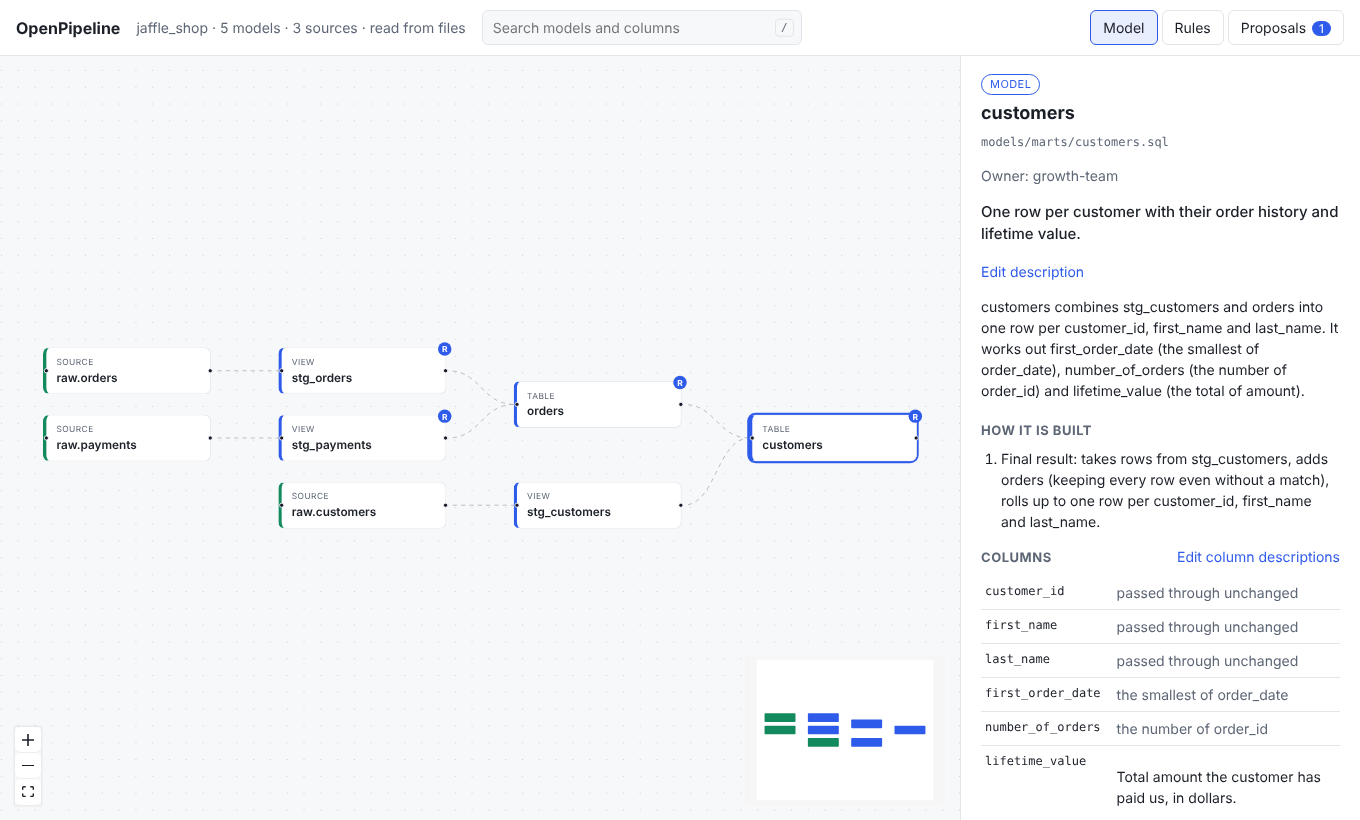
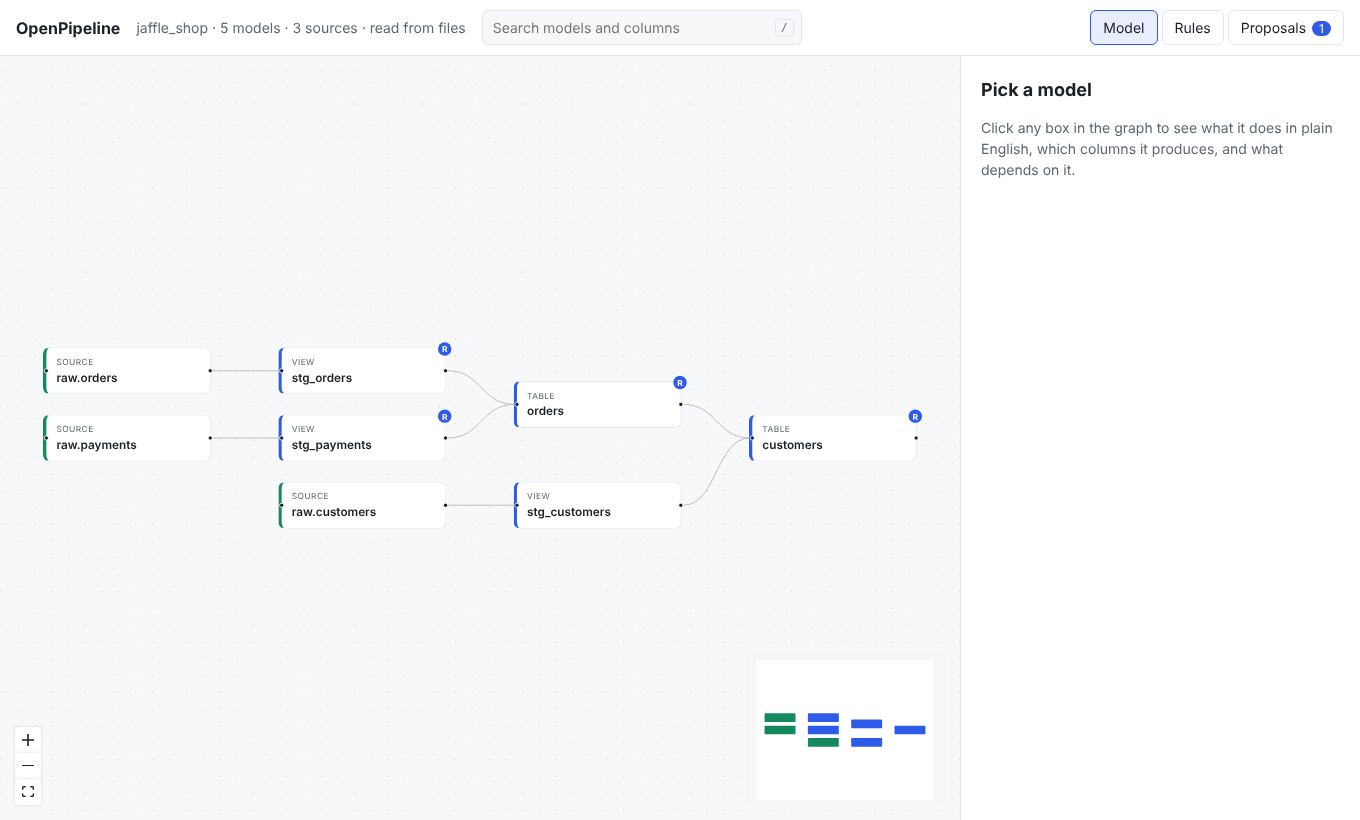
Click a box and read what the model does, where its data comes from, and what one row means. No SQL needed. Business rules are named, owned, and linked to the models that carry them.
Nothing to migrate. It reads your plain dbt files, writes plain dbt files, does not run dbt, and needs no warehouse credentials. Stop any time and your project is as it was.
An MCP server lets agents such as Claude read the project and propose changes. A person reviews each one on the graph and accepts or rejects it. Agents never write to your project directly.
pip install openpipeline
openpipeline demo
This copies the bundled jaffle_shop example to a temporary folder, files one pending proposal from an imaginary agent, and starts the server at http://127.0.0.1:8484. Or poke at a read-only copy right here.