OpenPipeline
From SELECT * to plain English. Every dbt model as a story anyone can read. Every change, from a teammate or an AI agent, approved by its owner before it lands.
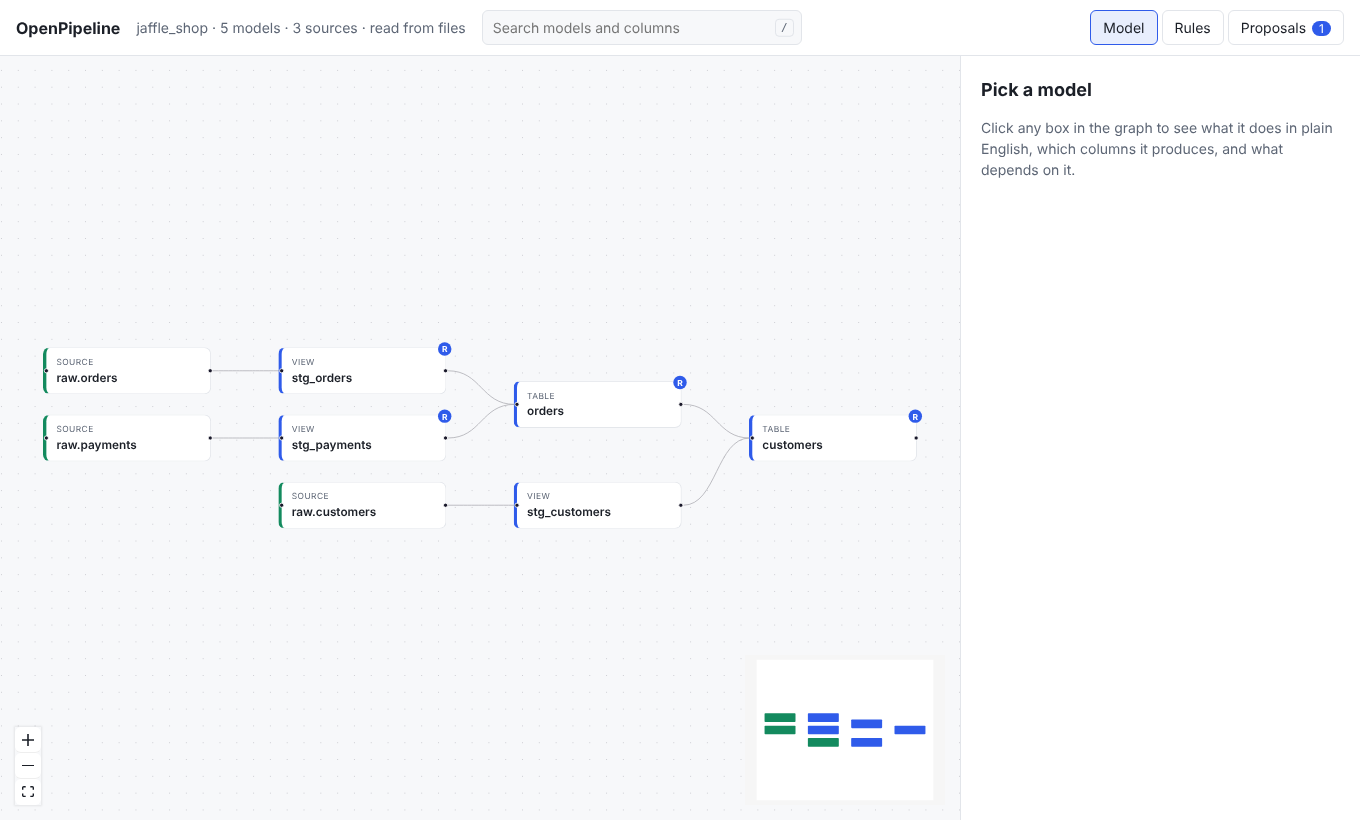
OpenPipeline opens a dbt project you already have. It shows every model and source on a map, explains each model in plain words, and gives you a safe way to review changes, whether a teammate or an AI agent wrote them.
The 30-second pitch
- For business readers. Click a box and read what the model does, where its data comes from, and what one row means. No SQL needed. Business rules, such as "revenue counts once an order has shipped", are named, owned, and linked to the models that carry them.
- For data engineers. Nothing to migrate. OpenPipeline reads your plain dbt
files (or
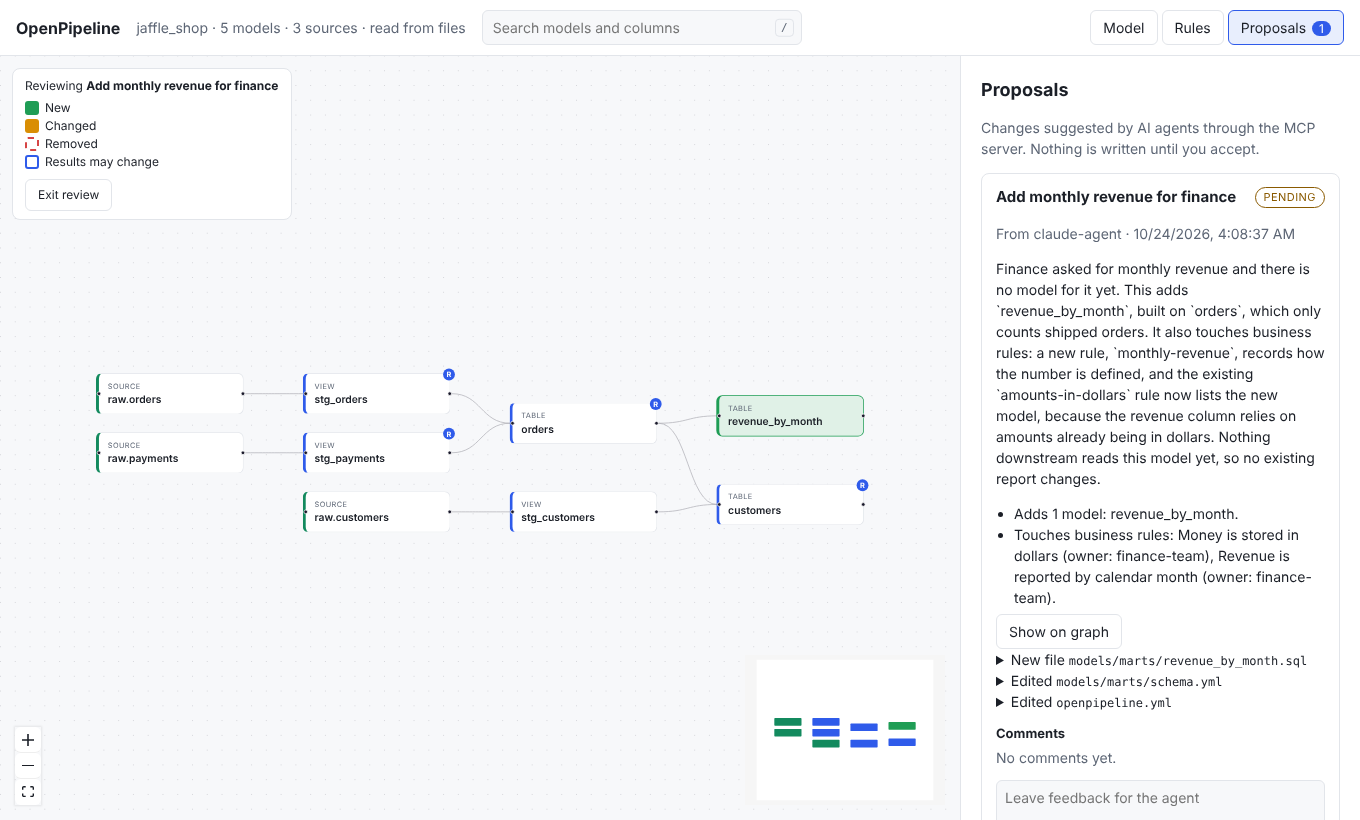
target/manifest.json) and writes plain dbt files. It does not run dbt and needs no warehouse credentials. Stop using it any time and your project is exactly as it was. - For AI agents. An MCP server lets agents such as Claude read the project and propose changes. A person reviews each proposal on the graph and accepts or rejects it. Agents never write to your project directly.
Try it in one command
pip install openpipeline
openpipeline demo
This copies the bundled jaffle_shop example to a temporary folder, files one pending proposal from an imaginary agent, and starts the server at http://127.0.0.1:8484. Open the Proposals tab and press Show on graph to see a review.
Use it on your own project
openpipeline serve path/to/your/dbt/project
Then open http://127.0.0.1:8484. See Getting started for pip, Docker, and Compose.
What is in the box
| You want to | Go to |
|---|---|
| Understand a model | Reading the graph and stories |
| Fix a missing description | Editing descriptions |
| Get a friendlier written explanation | AI explanations |
| See real rows | Sample rows |
| Find a column and trace it | Search and column lineage |
| Name and own the rules in your SQL | Business rules |
| Get a summary on every pull request | PR summaries |
| Let an agent suggest changes safely | Working with AI agents |
Early release (0.x)
OpenPipeline is young, and names and options may change before 1.0. If something is confusing or broken, please open an issue.